| In ancient times, Venezuela
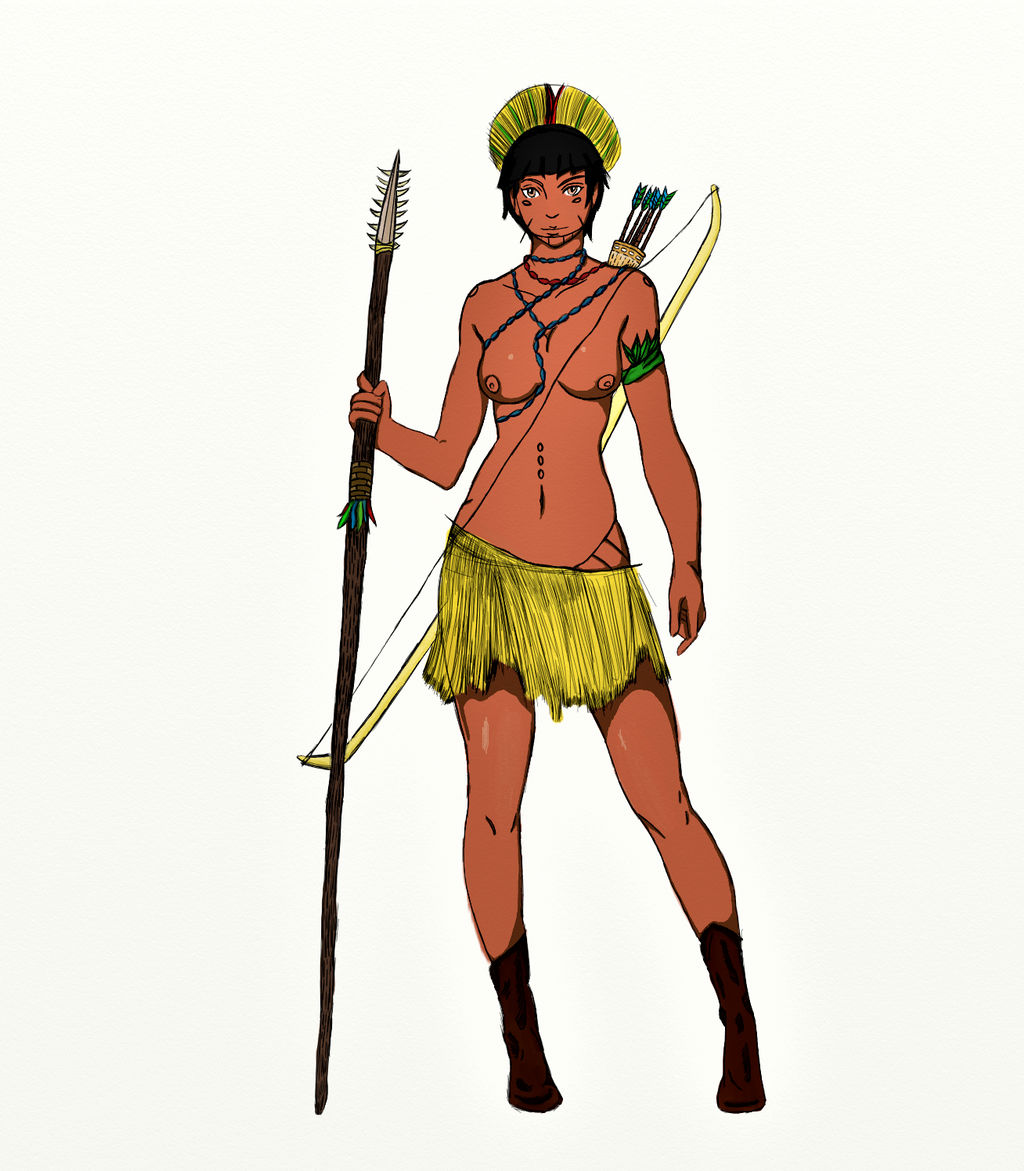
was paradise for the Indians who lived on its beaches,
in its tropical forests, and on the gentle grassland of
the llanos. There were three main groups: the Carib, Arawak,
and the Chibcha. They lived in small groups and all of
them practiced some degree of farming; the land, however,
was bountiful enough so that this was not always a necessity.
They could easily hunt, fish for, and gather their food.
The most advanced of the three were the Chibcha who lived
on the eastern slopes of the Andes. Though they never
developed large cities, their agricultural skill were
formidable: they terraced parts of the Andes and built
sophisticated irrigation channels to water their crops.
|
| Christopher Columbus was the first European
to visit Venezuela. He came in 1498 during his third voyage
to the New World, and landed on the Peninsula de Paria.
Following the coast, he explored the Rio Orinoco Delta
and concluded that he had found much more than another
Caribbean island. More explorers came a year later, and
it was Alonso de Ojeda who gave the country its name.
Arriving at Lake Maracaibo, he admired the stilted houses
that the Indians had build above the lake and called the
place Venezuela - "Little Venice." A year after
that the Spanish established their first settlement, Nueva
Cadiz, which was later destroyed by a tsunami. Early colonization
in Venezuela was much less rampant than it was in other
parts of South America, and the colony was ruled with
a loose hand from Bogota. It was much less important to
the Spanish than the mineral-producing colonies of Western
South America, but Venezuela would later surprise the
world when massive oil reserves would be discovered. |
|
| Venezuela may have been
a quiet outpost on the edge of the Spanish Empire, but
it gave birth to the man who would one day turn that
empire on its head: Simon Bolivar. With the help of
British mercenaries, Bolivar and his followers campaigned
against the Spanish tirelessly, marching across the
Andes and liberating Colombia in 1819, Venezuela in
1821, and Ecuador, Peru, and Bolivia in 1825. Much of
his army was composed of native Venezuelans. Independence
did not prove easy for the new nation. Civil strife,
wars, and dictatorships raged in the country well into
the next century. Though some dictators sought real
reform, most milked their positions for personal gain.
Border disputes with the British colony of Guyana erupted
in the 1840s, and although they never boiled over into
full-fledged warfare, Venezuela still disputes the border
to this day.
|
| In the early 1900s, the conflict-ridden
nation finally began to get on its economic feet with
the discovery of oil, and by the 20s Venezuela was beginning
to reap the benefits. Unfortunately, most of the wealth
remained with the ruling class, and the plague of dictators
continued until 1947 when Romulo Betancourt led a popular
revolt and rewrote the constitution. The first president-elect
in Venezuela's history took office the same year, the
novelist Romulo Gallegos. Unfortunately, he was ousted
by another dictator and the country did not experience
a non-violent presidential succession until 1963. For
the next 25 years, things went comparatively well. An
oil boom in the mid-1970s saw enormous wealth pour into
the country, though, as always, the vast lower class benefited
little. Oil prices dropped in the late 80s and once again
the country was thrown into crisis. Riots swept through
Caracas and were violently repressed, and two coup attempts
took place in 1992. Right now, the nation's stability
and future are uncertain. Despite a rough history, Venezuelans
are infamous in South America for their easy-going nature
and fun-loving spirit. |
 |
| Their national mythology
hails back to the days when independent and rugged settlers
tamed the lawlessness of the llanos, a heritage not unlike
that of the American West. Most Venezuelans them come
from a mix of European, Indian, and African roots, while
a minority are exclusively white, black, or Indian. Roman
Catholicism is the overwhelmingly dominant religion. |
|